Before your child learns their ABCs, something remarkable happens in their brain
That Moment When Everything Changes
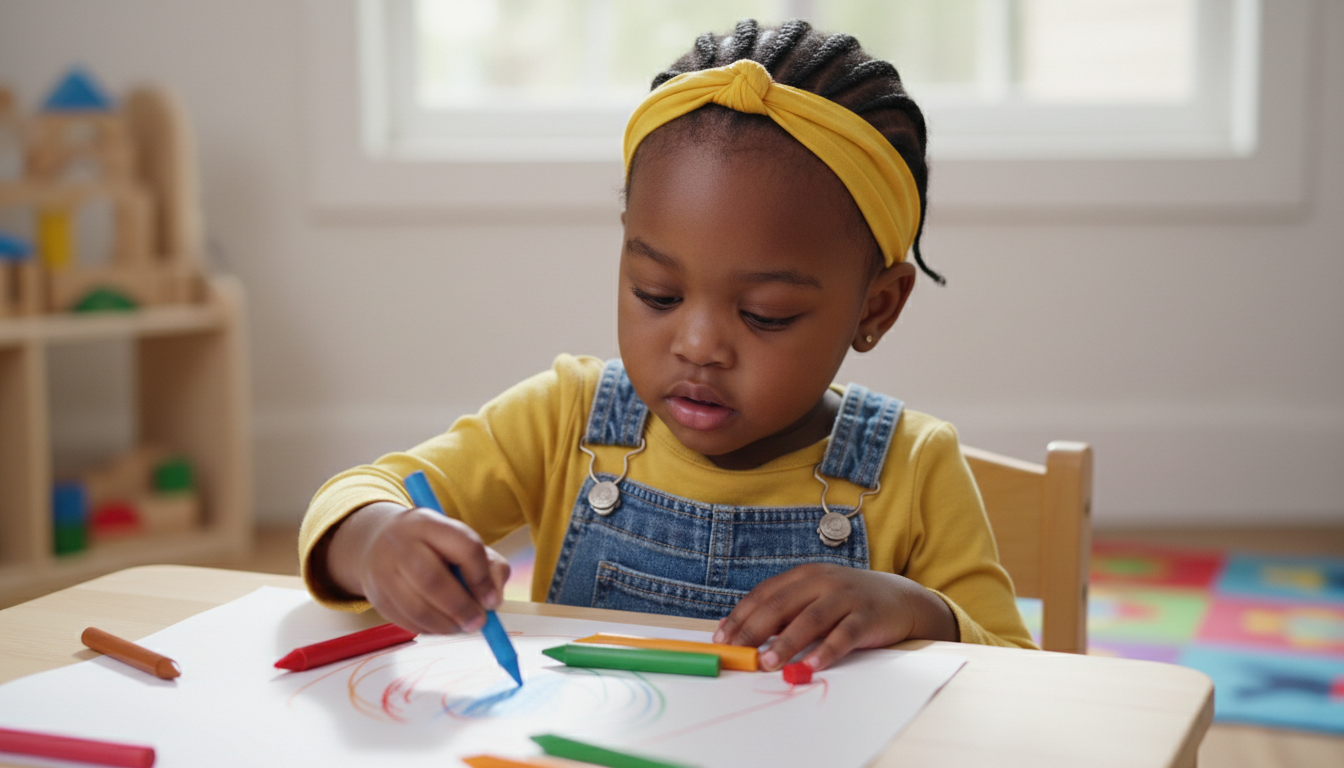
Picture your toddler with a crayon. They are scribbling away – loops, lines, dots – pure creative freedom on paper. It all looks the same to you. Scribbles are scribbles, right?
But here is something fascinating: at some point between ages 2 and 3, many children start doing something different. Ask them to “draw a dog” and then “write dog” – and their marks will look systematically different. Not because they know how to write. They do not. But because they have figured out something profound.
They have realised that writing and drawing are different things.
What Researchers Call This Shift
Developmental psychologists call this writing-drawing differentiation. It is the moment when a child understands that writing is not just another kind of picture – it is a completely different system with its own rules.
This might sound simple. But think about what it means. Your child is grasping that those squiggles in books carry meaning in a different way than pictures do. They are beginning to understand symbolic systems – one of the most important cognitive leaps humans make.
“The milestone is not about knowing letters. It is about understanding what writing is.”
Why You Have Probably Never Heard of This
Most parenting advice focuses on letter recognition and name-writing. Those are visible, measurable skills that feel concrete. But this earlier shift? It is invisible to most parents. Both the “drawing” and “writing” still look like scribbles.
The differences are subtle. Researchers have developed specific methods to spot them – analysing features that require trained interpretation. These are not things you would notice while making dinner.
What Makes This Hard to See
A toddler’s early “writing” and “drawing” can look remarkably similar to the untrained eye. Both may appear as scribbles. The differences require careful analysis to detect – which is exactly why this milestone often goes unnoticed.
What the Science Actually Shows
Researchers have been studying this for decades. Emilia Ferreiro and Ana Teberosky pioneered work showing that children construct their own theories about how writing works – and distinguishing it from drawing is the foundational first step.
More recent research suggests most children reach this milestone around 2 years and 8 months, though there is natural variation. By age 4, most have passed it. By age 6, writing and drawing have become completely separate systems in children’s minds.
The key insight? This conceptual understanding comes before letter knowledge. Children figure out what writing is before they learn how to do it.
Why Should You Care?
Here is where we need to be honest about what the research does and does not tell us.
This milestone gives us a window into cognitive development. When your child starts treating writing differently from drawing, they are showing you they have grasped something important about how symbols work.
Children who have reached this milestone are demonstrating that they recognise writing and drawing serve different purposes, have started noticing how writing looks and behaves differently, and are building their understanding of symbolic systems.
Insight, Not Prediction
Knowing where your child is on this journey helps you understand their current thinking about writing. It is insight into their development right now – not a prediction of their future success or struggles.
What we cannot say is that missing this milestone at a particular age means your child will have problems later. Every child develops at their own pace. The research documents that this milestone exists and that it is part of how literacy understanding develops – but the link to later outcomes is still being studied.
What Can You Do?
The good news is that most children reach this milestone naturally through everyday life. Reading books together, pointing out signs and labels, letting them see you write shopping lists – these simple activities expose children to the idea that writing exists and does something different from pictures.
Some things that support this development:
- Pointing out writing in the environment – on signs, labels and packaging
- Letting children see you write lists, notes and messages
- Reading books and talking about how the words and pictures work together
- Providing lots of opportunities for mark-making with different materials
- Celebrating their early attempts at both drawing and writing
Notice there are no flashcards on that list. This is not about drilling letters. It is about letting children discover that writing is a thing that exists in the world – and that it is different from drawing.
The Bottom Line
Before your child writes their name, before they recognise the alphabet, before any formal instruction begins – their brain is already working out what writing actually is. It is a hidden milestone that most parents never know to look for.
Understanding this shift will not change what activities you do with your child. But it might change how you see those early scribbles. That page full of loops and lines? It might be the first sign that your child is figuring out one of humanity’s greatest inventions.
Read the full research overview →
Curious About Your Child’s Development?
Our Starter tool can tell you whether your child has reached this milestone – plus practical guidance on supporting their journey.